Manufactured Menace: The WNBA's Villain Era Is Putting Its Boom at Risk
NOTE: While writing this post, besides thinking through the business lessons to be learned, I really struggled to decide who is at fault for the current state of the WNBA. While the WNBA league office, the players, and officiating crews are probably equally to blame, I ended on the opinion that the players are the ones who may ultimately destroy a league on the cusp of being at its highest point of legitimacy in the last 30 years if they don't recognize what the NBA learned in the 1980s, when the NBA was basically in a position similar to the WNBA's today.
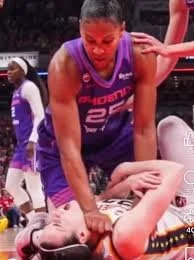
On June 24, 2026, Phoenix Mercury forward Alyssa Thomas drove a fist into Caitlin Clark's throat during a loose-ball scramble. The officials reviewed the play in real time and called nothing. About a day later, after the outrage cycle peaked, the league retroactively upgraded the play to a Flagrant 2 and suspended Thomas for one game. Clark, meanwhile, left that same game in the third quarter, grabbing her back after another hard foul that was never upgraded at all.
That sequence tells you everything about where the WNBA is right now, as well as provides a good leadership lesson. Not the foul itself. The response.
The WNBA is in the middle of a historic growth run, and it is spending that momentum on a villain era. Excessive physicality, escalating technical fouls, retroactive suspensions, and a discipline system that only activates when public pressure demands it. It looks like a league that has decided conflict is content. It plays like the NBA of the late 1980s, before that league figured out that skill sells better than menace, and that protecting its biggest asset at the time (Michael Jordan) would be a priority. The WNBA is putting its single most valuable asset (Clark) at risk in the process.
The Pattern is Now Three Seasons Long
This is not one bad night. It is a documented, multi-year pattern, and Caitlin Clark is at the center of nearly every data point.
In June 2024, Chennedy Carter hip-checked Clark on a dead-ball play. The officials on the floor did not even call a foul. The league upgraded it after the fact.
In June 2025, a Fever-Sun game produced six technical fouls and two flagrants. Jacy Sheldon poked Clark in the eye. Marina Mabrey then shoved Clark to the floor, a play the game officials explicitly said did not meet flagrant criteria. The next day, under heavy scrutiny, the league reversed itself and upgraded Mabrey's technical to a Flagrant 2. Nobody was suspended. Weeks later, Clark suffered the first of four separate muscle injuries in a season that ultimately ended for her in September. She had never missed a game in her college or rookie career.
In June 2026, the Thomas throat shot arrived just days after a Fever-Mercury game that featured six technicals and an ejection. In that game, Clark picked up her fifth technical of the season, by her account for clapping. The league upheld it, fined her $1,000, and left her just a few technicals away from an automatic suspension. So the league office can act decisively on clapping, but a fist to the throat requires a 48-hour public referendum first.
Edge Has Become the Brand
Here is the uncomfortable part. The WNBA has not just tolerated this environment. It has marketed it.
The league built an entire campaign around the "Diana Taurasi rite of passage," the idea that rookies get welcomed to the “W” with bruises. A vocal old guard of players and analysts still defends this culture openly. After the Thomas suspension, veteran Sydney Colson said on ESPN that she did not consider the play a flagrant at all. Napheesa Collier, one of the league's biggest stars, has publicly compared the current product to 1980s NBA basketball, and not as a compliment. Her words: the game is too physical, and it is not fun to watch or play.
The NBA already ran this experiment. “The Bad Boys” era Detroit Pistons drew eyeballs, right up until the league recognized that clotheslines and hand-checking were capping its ceiling. And perhaps more importantly, they understood that they needed their stars (notably Michael Jordan, Magic Johnson, Larry Bird, and others) on the court, not hurt due to the overly-aggressive actions of other players. The NBA deliberately legislated physicality out of the game, unlocked freedom of movement, and built a global skill-based product around its stars. Now look at the NBA… a sports powerhouse, generating billions of dollars in revenue every year. The WNBA seems to be running the tape in reverse: leaning on rivalry, menace, and viral confrontation clips for relevance while its enforcement arm shrugs.
Maybe nobody in the league office wrote "become the villain league" on a whiteboard, but it does not matter. When your discipline is this inconsistent and your marketing celebrates the bruises, the strategy is the behavior. The league is choosing this identity by default.
Look at What That Identity Puts at Risk
The business case here is not subtle.
A finance professor at Indiana University Columbus calculated that Clark alone accounted for 26.5 percent of all WNBA economic activity in her 2024 rookie season, spanning tickets, merchandise, and television. Of the 22 regular-season games that drew more than a million viewers in 2024, the Fever played in 21 of them. When Clark went down in 2025, national viewership dropped roughly 55 percent over the following two weeks, and the All-Star Game shed 36 percent of its audience without her.
That audience is the collateral behind everything the league just bought. An 11-year, $2.2 billion media rights deal. Expansion fees of $250 million per franchise, with the league growing to 18 teams by 2030. A new CBA that raised the salary cap from $1.5 million to $7 million and the minimum salary from roughly $66,000 to $270,000. Every one of those numbers was underwritten by a growth story, and no single person is more responsible for that story than the player the league keeps failing to protect.
To be clear, the league showed real resilience in 2025. Attendance hit an all-time high, and overall viewership recovered by season's end even with Clark sidelined. The WNBA is bigger than one player, and it should be proud of that. But resilience is not a license for negligence. You do not stress-test your most valuable asset just because the balance sheet survived the last injury.
Discipline by Press Release is Not a Standard
The WNBA knows it has a problem. Before the 2026 season it raised technical foul fines to $500, built an escalating schedule with a suspension at the eighth technical, created a flagrant point system with automatic suspensions, assembled a task force on physicality and officiating, and hired a referee performance and development advisor.
And yet, two months into the 2026 season, coaches and general managers from eight different teams have stated that officiating remains subpar. Clark is now publicly calling for full-time professional referees. The Thomas play was reviewed live and dismissed, then reversed only after the clip went viral.
That gap is the whole story. A standard is what you enforce in the moment, at cost, when no one is forcing your hand. What the WNBA has instead is a reaction function: officials swallow their whistles in real time, and the league office cleans up afterward based on how loud the internet gets. Rules on paper plus enforcement by public pressure equals no standard at all. And every retroactive upgrade is the league admitting, in writing, that its own officials got it wrong.
The Leadership Takeaway
Strip away the basketball and this is a governance case study any operator will recognize.
Protect asymmetric assets asymmetrically. When a quarter of your economics flows through one asset, its protection is a board-level risk item, not a public relations chore. Most organizations have a version of this: the rainmaker, the anchor client, the big event, the one system everything runs through. If your safeguards for that asset are the same as for everything else, you have mispriced your risk.
Standards are what you enforce in real time. Every organization has values on the wall and a fine schedule in the handbook. The actual standard is revealed in the moment of enforcement, especially when enforcement is expensive or unpopular. If your rules only activate after outside pressure, you are not managing operations. You are managing optics, and your best people can tell the difference.
Edge without governance is a liability, not a brand. Intensity, rivalry, and competitive fire are legitimate growth fuel. The WNBA's rivalries are real and they drive genuine interest. But edge only compounds inside a container of consistent rules. Remove the container and the same energy that built the audience starts consuming the product, one viral cheap shot at a time.
The WNBA Players Would Rather Try and Look Tough Than Work to Understand How Their Bread is Buttered
The WNBA does not have a talent problem, an audience problem, or a money problem (at least not as much as in the past). It has a standards problem. It is trying to look tough when its actual job is to be consistent. Villain eras make for great content and terrible balance sheets. The league still has time to choose the boring, disciplined, profitable path: protect the players, enforce the rules the same way on Tuesday night as you do after a viral Thursday, and let the basketball be the show.
That is not just advice for a basketball league. It is advice for anyone running anything.
What is the "asymmetric asset" in your business, and would your current standards actually protect it under pressure? I would love to hear how other operators think about this. Drop a comment or reach out.
