Your Calendar Is the Most Honest Strategy Document in Your Company
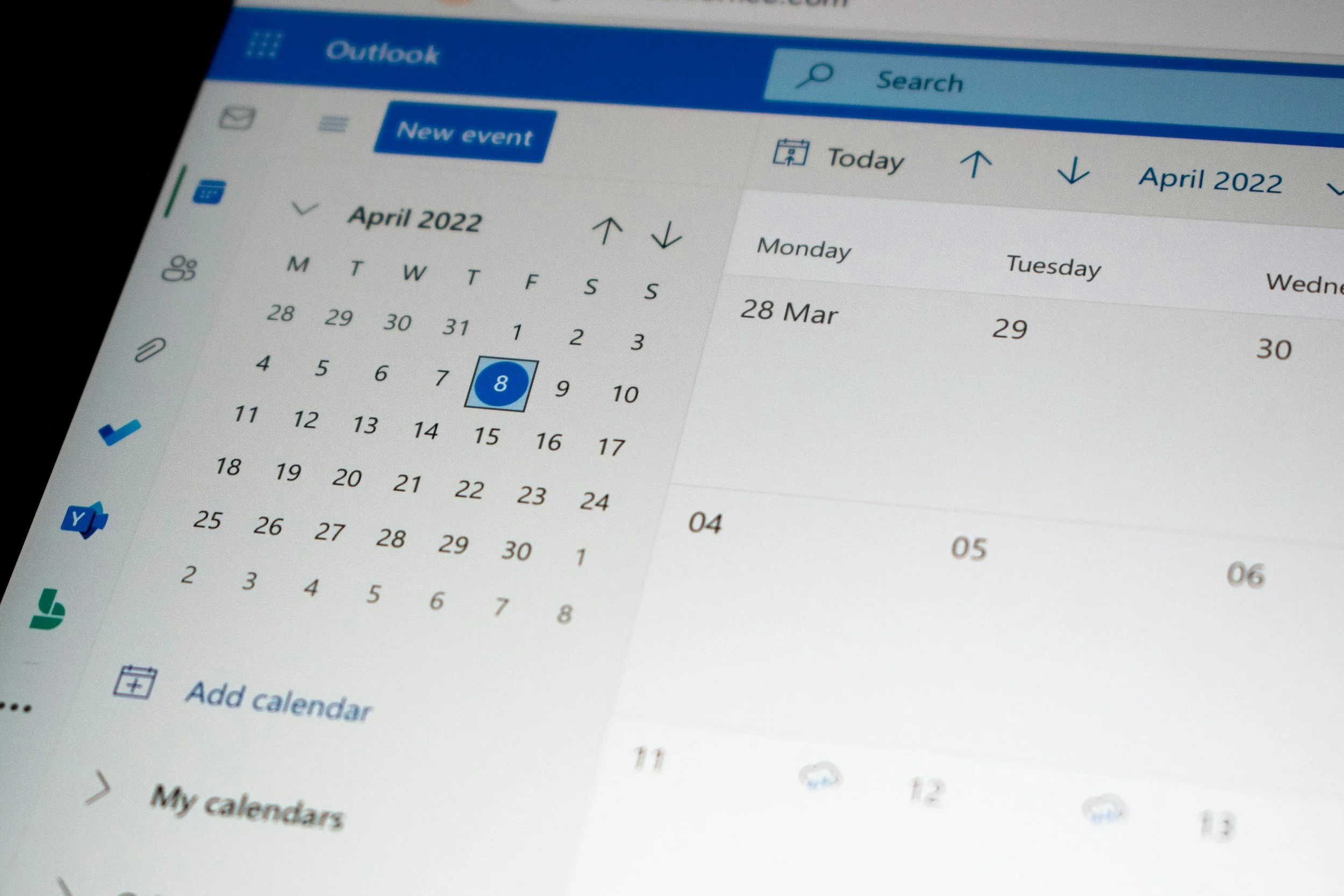
Every company has a strategy document. It's polished, it's aligned, and it describes what the organization intends to do.
Your calendar is a different kind of document. A calendar is the only artifact in a company that is both a plan and a record. It shows not what you meant to prioritize, but what you actually spent the scarcest resource you control on. Strategy decks describe intent. Budgets allocate money, which most companies have more of than executive attention. The calendar is the only place where your real priorities are written down in a form that can't be revised after the fact.
Which is why it's usually so uncomfortable to read.
What does a calendar actually reveal?
Economists distinguish between stated preference and revealed preference… what people say they want versus what their behavior shows they want. When the two conflict, the behavior is the truth.
An executive calendar is a revealed-preference document. It records, in fifteen-minute increments, what won when something had to lose.
I've asked a lot of senior leaders to name their top three priorities for the quarter. Nearly all of them can, immediately and with conviction. Then I ask how many hours they gave those three things last week.
The pause that follows is the point of this article.
It isn't that executives are lying about their priorities. They believe every word. It's that stated priority and calendar allocation are set by two completely different mechanisms, and only one of them involves the executive making a choice.
Why is stated priority such a bad predictor of actual time?
Here's the structural reason, and it explains almost everything about how executive weeks go wrong:
Reactive work has a requester. Strategic work doesn't.
Someone wants thirty minutes. Someone escalates a decision. Someone needs a review before Thursday. Every one of those arrives attached to a human being who will follow up, who has a deadline, and who will notice if you say no.
Nobody sends a meeting invite for thinking about the three-year plan. No one follows up to ask whether you spent two hours on the org design problem you've been circling for six weeks. The most important work in an executive's portfolio is, almost by definition, the work with no one behind it pushing.
So the calendar fills according to social pressure rather than strategic weight. Not because anyone decided it should, because nobody decided it shouldn't.
This is also why the fix is rarely discipline. Executives who fail at protecting strategic time are not less disciplined than the ones who succeed. They're operating a system where the defaults run against them, and willpower is a poor substitute for changing defaults.
How do you read your own calendar?
Pull the last sixty days. Not last week. Last week was unusual, and so was the week before, and that's the point. Two months is long enough that the pattern stops being deniable.
Then answer four questions. (For the full procedure: classification rules, the hard cases, and benchmarks to compare against, see how to audit your own calendar in 30 minutes.)
1. What's the split? Classify every block into four buckets: strategic, reactive, operational, admin. Total the hours. Most senior leaders estimate they spend 30 to 40 percent of their time on strategic work. The number that comes back is usually somewhere in the low teens.
2. Where are you the decision-maker? Go through your meetings and mark the ones where you were the person the decision required. If it's under half, you're attending your own calendar rather than running it.
3. How many two-hour blocks did you have? Count uninterrupted stretches of two hours or more during working hours. Complex thinking has a warm-up cost; a fragmented day of thirty-minute gaps has no capacity for it, no matter how many total free minutes it contains.
4. What did your stated priorities actually get? Take the three things you'd name as your top priorities and add up the hours that went to them. Put that number next to the total. This is the one that lands.
None of this requires a tool. It requires an export and about thirty minutes of honest classification.
What do you do about the gap?
The reflex is to attack the calendar directly: decline more, block mornings, protect Fridays. That works for roughly three weeks.
Then it refills. Not because the executive got lax, but because nothing upstream changed. The same requests arrive through the same channels with the same defaults, and a cleared calendar is simply available space. If the inflow that filled it the first time is untouched, it will fill it again.
Which means the calendar is a superb diagnostic and a poor intervention point. It tells you the system is misaligned with remarkable precision. It rarely tells you where the actual constraint sits, that's usually upstream, in what's allowed to reach you at all, or downstream, in what never gets handed off.
The useful move is to treat the calendar the way you'd treat a P&L: not as the thing to fix, but as the report that tells you where to look.
The reason it's the honest document
Executives argue with 360 feedback. They argue with engagement surveys. They argue with their own reputations, and often they're right to.
Nobody argues with a timestamp.
That's what makes the calendar the most useful artifact in executive work. It has no agenda, no interpretation, and no interest in being tactful. It just records where the hours went, and then hands you the gap between the leader you describe and the one your organization actually experienced last quarter.
Most people never look. It takes thirty minutes and it's the highest-yield half hour available to a senior leader in any given month.
FAQ
How far back should I look at my calendar? Sixty days. A single week is distorted by whatever was happening that week, and most executives will dismiss a bad week as atypical. Two months removes that escape hatch.
What counts as strategic time? Work that changes the direction, structure, or capability of the organization rather than advancing its current operations. A useful test: if it could be postponed a month with no visible consequence, but postponed a year would be serious, it's strategic.
Isn't a full calendar a sign of an effective executive? No. It's a sign of a busy one. The relevant measure isn't how full the calendar is but what proportion of it required you specifically and how much room remains for the work only you can do.
Why does my calendar refill after I clear it? Because clearing a calendar changes availability, not inflow. If the channels, standing invitations, and escalation paths that filled it are unchanged, the space gets reclaimed, usually within two to four weeks.
Bob Stanke is a Chief of Staff, the role companies create when an executive's operating system has outgrown them. He writes about the operating layer of executive work: what reaches you, where your attention goes, how decisions clear, and what leaves your desk.
